


Ferrari and BMW Join Tesla and China in Switch from Copper to Cheaper Aluminium
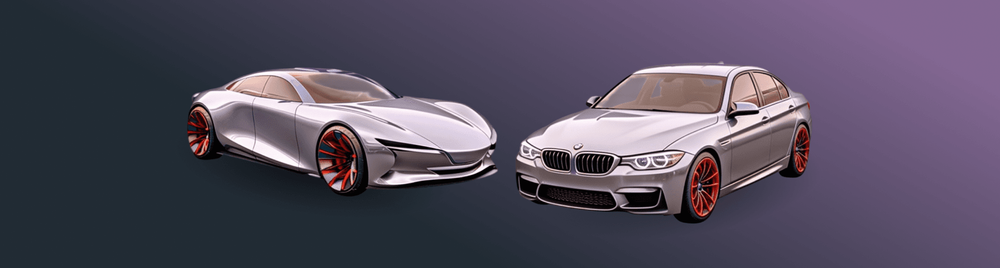
Ferrari and BMW are rolling out new models featuring lightweight, cost-effective aluminium wiring, accelerating a shift away from copper — the dominant material in electric wiring since the invention of the electric battery two centuries ago.
The decisions follow similar moves by Tesla and Chinese EV makers and reflect a broader industry trend forecast to affect approximately 2% of global copper demand this year, according to J.P. Morgan. Even more copper could be switched to aluminium in the coming years because of a structural rise in copper prices, driven by shortages of the metal and increased demand from the green-energy sector and data centres.
Companies across several sectors are migrating to aluminium because of far lower prices and comparable performance, according to Reuters interviews with 18 carmakers, cable and air-conditioning companies, metals producers, and consultants. Ferrari and BMW said they chose aluminium in part because of its lighter weight.
Copper Price Surge
The chart below shows LME copper prices from July 2023 to April 2026:
| Date | LME Copper Price ($) |
| July 2023 | 8 335 |
| Oct. 2023 | 8 000 |
| Jan. 2024 | 8 500 |
| April 2024 | 9 000 |
| July 2024 | 9 900 |
| Oct. 2024 | 9 800 |
| Jan. 2025 | 9 000 |
| April 2025 | 9 200 |
| July 2025 | 10 000 |
| Oct. 2025 | 10 500 |
| Jan. 2026 | 13 000 |
| April 2026 | 14 000 |
Lighter and Faster
Ferrari, which already uses aluminium for its bodies, engines, and chassis, told Reuters it started using the lightweight metal for power cables on its 296 hybrid sports car last year. Ferrari has since introduced aluminium wiring into other models, including the Luce, its first-ever EV launched last month. The move saves up to 20% of total wiring weight, said Ferrari communications executive Dario Esposito.
"We are not choosing aluminium because it's cheaper, we choose the material that has better performance," he said. However, the metal is much cheaper — currently about $3 100 per tonne, roughly a quarter of the price of copper.
Germany's BMW said it first used aluminium conductors in 2011 in its subcompact 1 series and progressively expanded the substitution to hybrids and EVs. Currently, it uses a large number of aluminium cables in both high- and low-voltage systems in its latest eDrive EV technology, launched last year.
Substitution Trends
The chart below shows the copper-aluminium ratio from 2022 to 2026:
| Date | Copper Aluminium Ratio |
| 2022 | 3.39 |
| 2023 | 3.50 |
| 2024 | 3.80 |
| 2025 | 3.60 |
| 2026 | 3.90 |
The ratio peaked at 4.3 in January 2026 as copper surged to an all-time high. It then slid as the Iran war boosted aluminium prices due to supply concerns, before rebounding when a peace deal was announced.
Chinese EV parts supplier JONVER has seen aluminium wiring product sales jump this year to approximately 30% of its total, up from about 20% in 2023. Norwegian aluminium producer Hydro said sales of aluminium heating-and-air tubing as a copper substitute have steadily grown in recent years. Hydro CFO Trond Olaf Christophersen said the company expects to gain market share as aluminium rapidly replaces copper in the sector.
Xavier Mathieu at France-based Nexans, the world's second-biggest cable maker, said manufacturers will still buy copper at higher prices because it performs better in certain applications — but will start buying aluminium when copper prices get approximately 3.5 times higher. Copper prices currently stand at more than 4.2 times the price of aluminium.
China EV Makers Take the Lead
The Chinese government encouraged companies to make the switch to aluminium in a March 2025 policy paper, and many have heeded the call. Analysts at consultancy Zhuochuang forecast that approximately 25% to 30% of components currently made from copper, by metal volume, could switch to aluminium in the power, automotive, and home-appliance sectors by 2030.
Chinese EV makers that have switched to aluminium wiring include AVATR, XPeng, and Xiaomi, said Terry Woychowski, president at engineering consultancy Caresoft Global. The three Chinese EV makers and Tesla did not respond to requests for comment.
Lightweight aluminium is especially attractive to EV makers because cutting weight allows longer driving ranges. Saving money is crucial for EV firms in China, where a price war has left margins razor-thin. Aluminium has ample room to gain ground in autos, where approximately 85% of electrical wiring busbars — which connect an EV's battery to its systems — are still copper, according to Hydro.
Market Sentiment:
The sentiment is positive for aluminium demand and negative for copper demand in the medium to long term. The structural shift toward aluminium wiring in the automotive sector, driven by both cost and weight considerations, represents a significant headwind for copper consumption. Ferrari and BMW's adoption of aluminium wiring, following Tesla and Chinese EV makers, validates the trend and suggests it will accelerate. The copper-aluminium ratio chart shows that copper prices have consistently traded at a premium of 3.5 to 4.3 times aluminium, making the substitution economically compelling. The 6% forecast of annual copper demand being replaced by aluminium by 2030 (up from 2% this year) underscores the scale of the potential impact. However, the shift is not without challenges: aluminium is less conductive, requiring more metal to carry the same current, and its production is energy-intensive, raising carbon footprint concerns. Tariffs and trade policy also complicate the economics. For copper producers, the substitution trend adds to the bearish case, alongside the structural supply-demand imbalance that has driven prices higher. For aluminium producers, this is a clear growth opportunity, particularly in the EV and data centre sectors. The market is watching for further adoption announcements and the pace of the transition. The long-term outlook for copper remains supported by green energy and AI infrastructure demand, but the substitution trend could cap price upside. The next catalysts are policy developments and cost competitiveness. Investors should monitor the copper-aluminium ratio and adoption rates. The substitution story is not new but is gaining momentum, and its impact on both metals is becoming more significant. The automotive sector's embrace of aluminium wiring marks a pivotal moment, and other industries are likely to follow. The market is pricing in a gradual but meaningful shift, and the direction is clear. The next decade will see aluminium gain market share at copper's expense, driven by economics, weight reduction, and sustainability considerations. The trend is structural, and the implications for both metals are profound. For investors, aluminium offers a compelling growth story, while copper faces a demand headwind that could temper the bullish supply narrative. The substitution trend is a key factor to watch in the commodity markets.
Disclaimer:
This content has been generated using AI technology and is intended for informational purposes only. While efforts have been made to ensure accuracy and relevance, this text should not be considered professional advice or an official statement. Always verify information from authoritative sources before making any decisions. This is not financial advice.
Read also

© 2026 BROKSTOCK SA (PTY) LTD.
BROKSTOCK SA (PTY) LTD is an authorised Financial Service Provider and is regulated by the South African Financial Sector Conduct Authority (FSP No.51404). BROKSTOCK SA (PTY) LTD Proprietary Limited trading as BROKSTOCK. BROKSTOCK SA (PTY) LTD t/a BROKSTOCK acts solely as an intermediary in terms of the FAIS Act, rendering only an intermediary service (i.e., no market making is conducted by BROKSTOCK SA (PTY) LTD t/a BROKSTOCK) in relation to derivative products (CFDs) offered by the liquidity providers. Therefore, BROKSTOCK SA (PTY) LTD t/a BROKSTOCK does not act as the principal or the counterparty to any of its transactions.
The materials on this website (the “Site”) are intended for informational purposes only. Use of and access to the Site and the information, materials, services, and other content available on or through the Site (“Content”) are subject to the laws of South Africa.
Risk notice Margin trading in financial instruments carries a high level of risk, and may not be suitable for all users. It is essential to understand that investing in financial instruments requires extensive knowledge and significant experience in the investment field, as well as an understanding of the nature and complexity of financial instruments, and the ability to determine the volume of investment and assess the associated risks. BROKSTOCK SA (PTY) LTD pays attention to the fact that quotes, charts and conversion rates, prices, analytic indicators and other data presented on this website may not correspond to quotes on trading platforms and are not necessarily real-time nor accurate. The delay of the data in relation to real-time is equal to 15 minutes but is not limited. This indicates that prices may differ from actual prices in the relevant market, and are not suitable for trading purposes. Before deciding to trade the products offered by BROKSTOCK SA (PTY) LTD, a user should carefully consider his objectives, financial position, needs and level of experience. The Content is for informational purposes only and it should not construe any such information or other material as legal, tax, investment, financial, or other advice. BROKSTOCK SA (PTY) LTD will not accept any liability for loss or damage as a result of reliance on the information contained within this Site including data, quotes, conversion rates, etc.
Third party content BROKSTOCK SA (PTY) LTD may provide materials produced by third parties or links to other websites. Such materials and websites are provided by third parties and are not under BROKSTOCK SA (PTY) LTD's direct control. In exchange for using the Site, the user agrees not to hold BROKSTOCK SA (PTY) LTD, its affiliates or any third party service provider liable for any possible claim for damages arising from any decision user makes based on information or other Content made available to the user through the Site.
Limitation of liability The user’s exclusive remedy for dissatisfaction with the Site and Content is to discontinue using the Site and Content. BROKSTOCK SA (PTY) LTD is not liable for any direct, indirect, incidental, consequential, special or punitive damages. Working with BROKSTOCK SA (PTY) LTD you are trading share CFDs. When trading CFDs on shares you do not own the underlying asset. Share CFDs are complex instruments and come with a high risk of losing money rapidly due to leverage. A high percentage of retail traders accounts lose money when trading CFDs with their provider. All rights reserved. Any use of Site materials without permission is prohibited.